



ADVANTAGES – EXAMPLE
HEALTHCARE
NOORDWEST ZIEKENHUISGREOP

APPLICATION
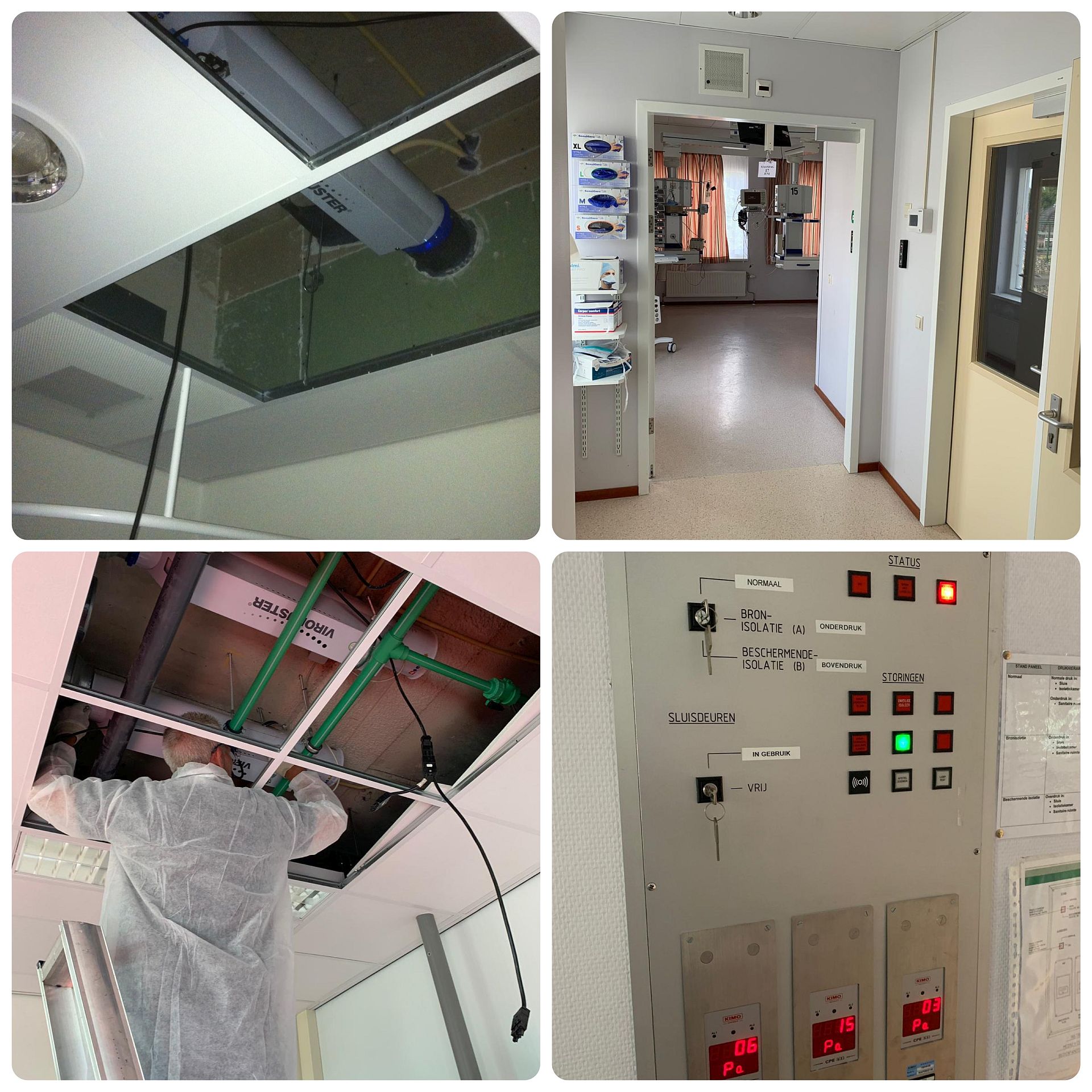
An isolation or quarantine room is designed to isolate patients infected with organisms that spread through tiny airborne droplets. Alternatively, these cleanrooms are used to protect particularly vulnerable patients – for example, during chemotherapy or after a bone marrow transplant – from external risks.
DESCRIPTION
These isolation and quarantine areas are designed according to defined requirements. Unfortunately, such rooms are quite costly and are only used for a few days each year. The technical setup of conventional systems is based on air treatment with HEPA filtration, which means the system must remain in permanent operation – even without patients. This is not a sustainable solution, especially when considering life-cycle costs. For these reasons, hospitals often have only a few central isolation and quarantine rooms available, and patients must be transferred to these specialized units when needed.
OUR CONCEPT
The fact that isolation rooms are occupied only for a few days while the ventilation system is expected to run continuously, even when empty, undermines sustainability policies – yet this has been the trade-off for greater biological safety. The alternative:
| ---> | A system based on the VIROBUSTER® Steritube offers better (viral) safety than conventional solutions – and thanks to its flexible operability, it is more cost-effective than standard HVAC systems when operating under 4,000 hours per year. |
| ---> | Our hybrid isolation room concept meets the highest requirements for both sustainability and safety. |
| ---> | Easy switching at the push of a button between patient room and isolation room – and back again. |
| ---> | Compared to conventional solutions, only a fraction of the investment, operating, and maintenance costs arise – while maintaining the same level of safety. |
