
ADVANTAGES – EXAMPLE
OFFICE BUILDINGS
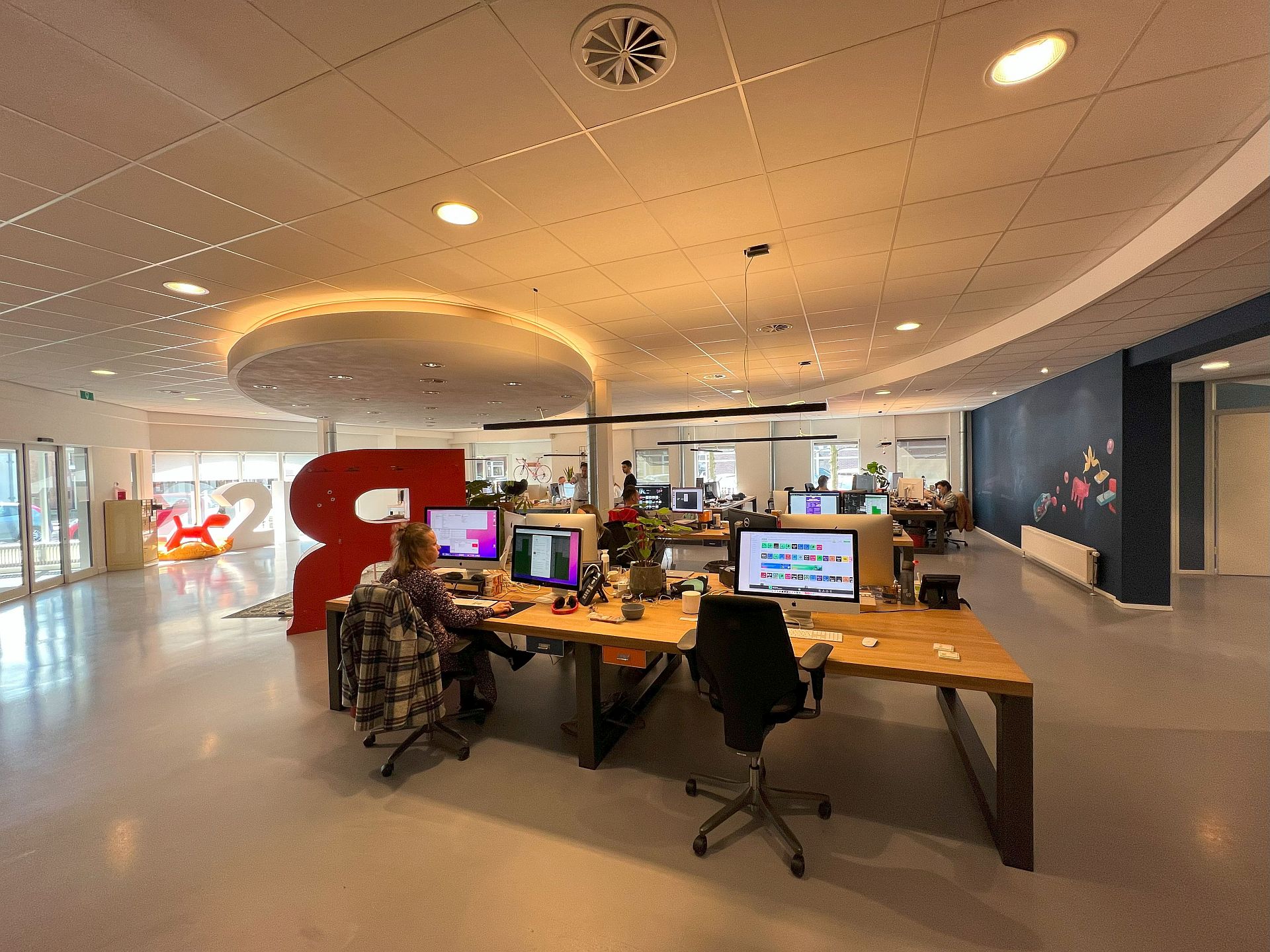
BRANDBUILDERS

APPLICATION
During the pandemic, air recirculation was generally prohibited. The consequence: all rotary heat exchangers had to be switched off. This measure is neither ecologically nor economically sustainable. To prevent such inefficiencies in the future while also structurally ensuring better infection protection during seasonal epidemics, new approaches are needed to reconcile the core requirements of infection control and sustainability.
DESCRIPTION
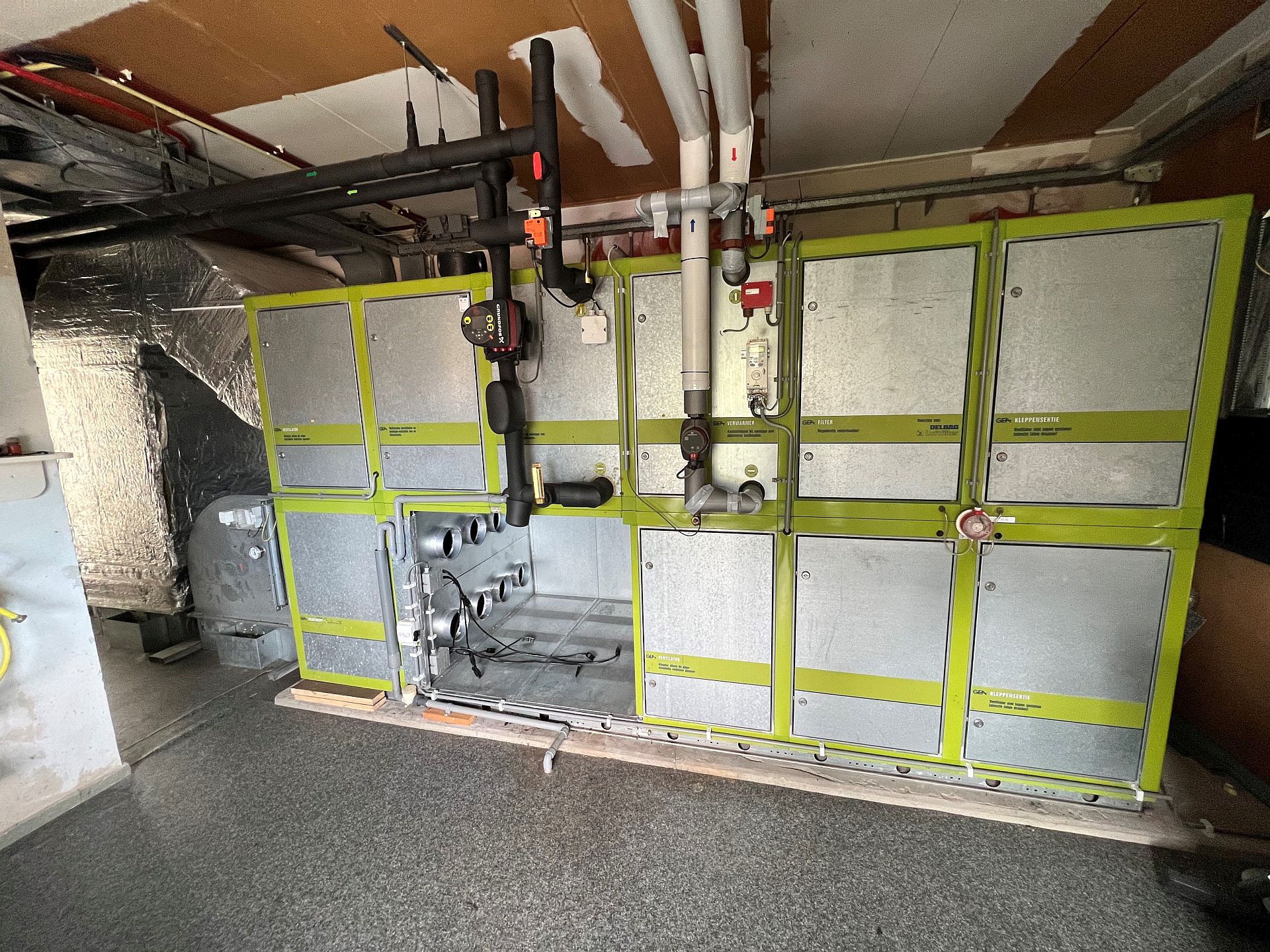
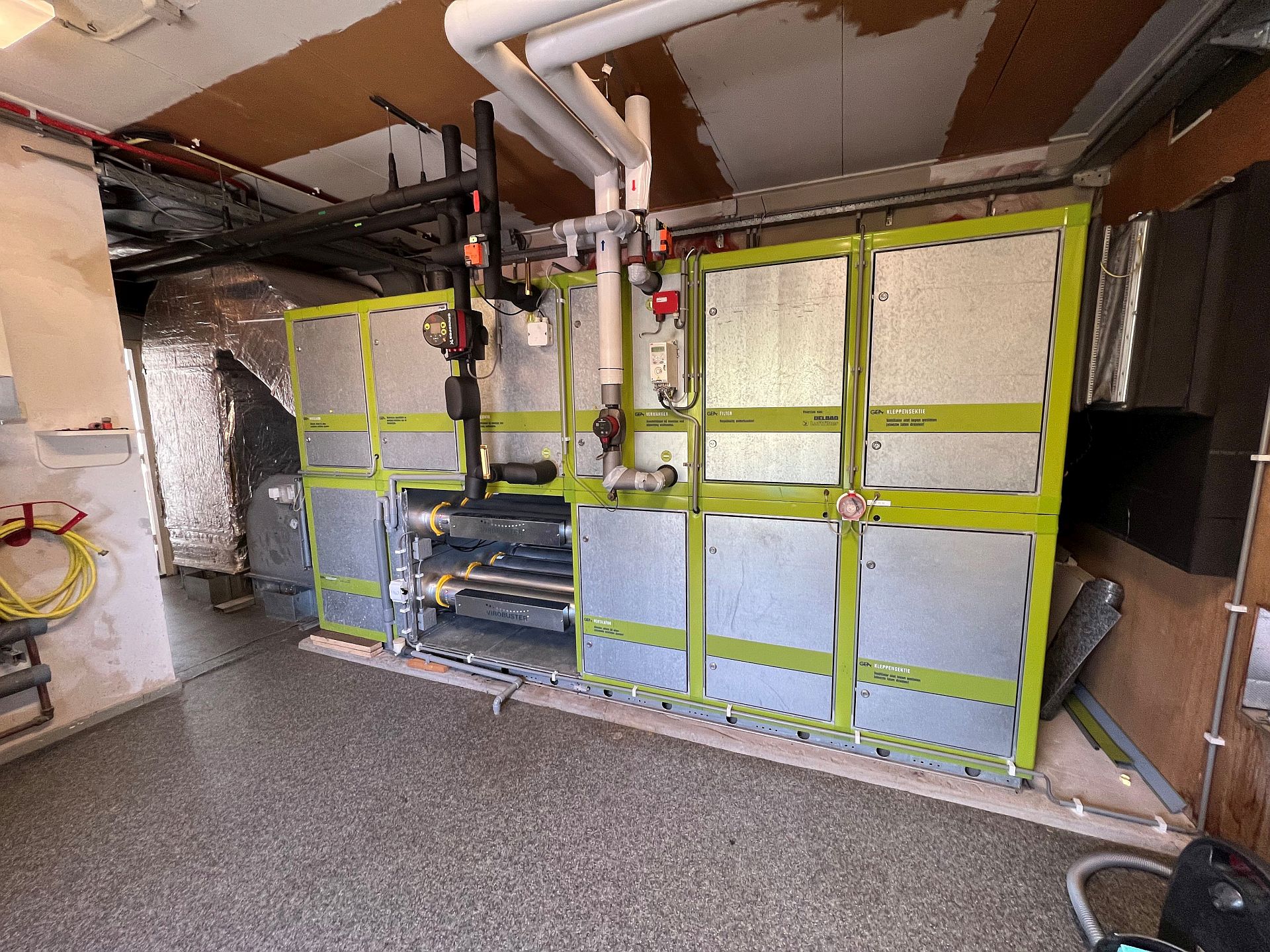
In this example, the virologically risky recirculation system was equipped with eight Steritubes. The advantage of UV-C over mechanical filtration is that UV-C units are activated only when needed, generating costs only when switched on. Another important point: UV-C is not subject to the Biocidal Products Regulation (BPR), unlike the widely promoted ionization and plasma technologies that became popular during COVID-19.
OUR CONCEPT
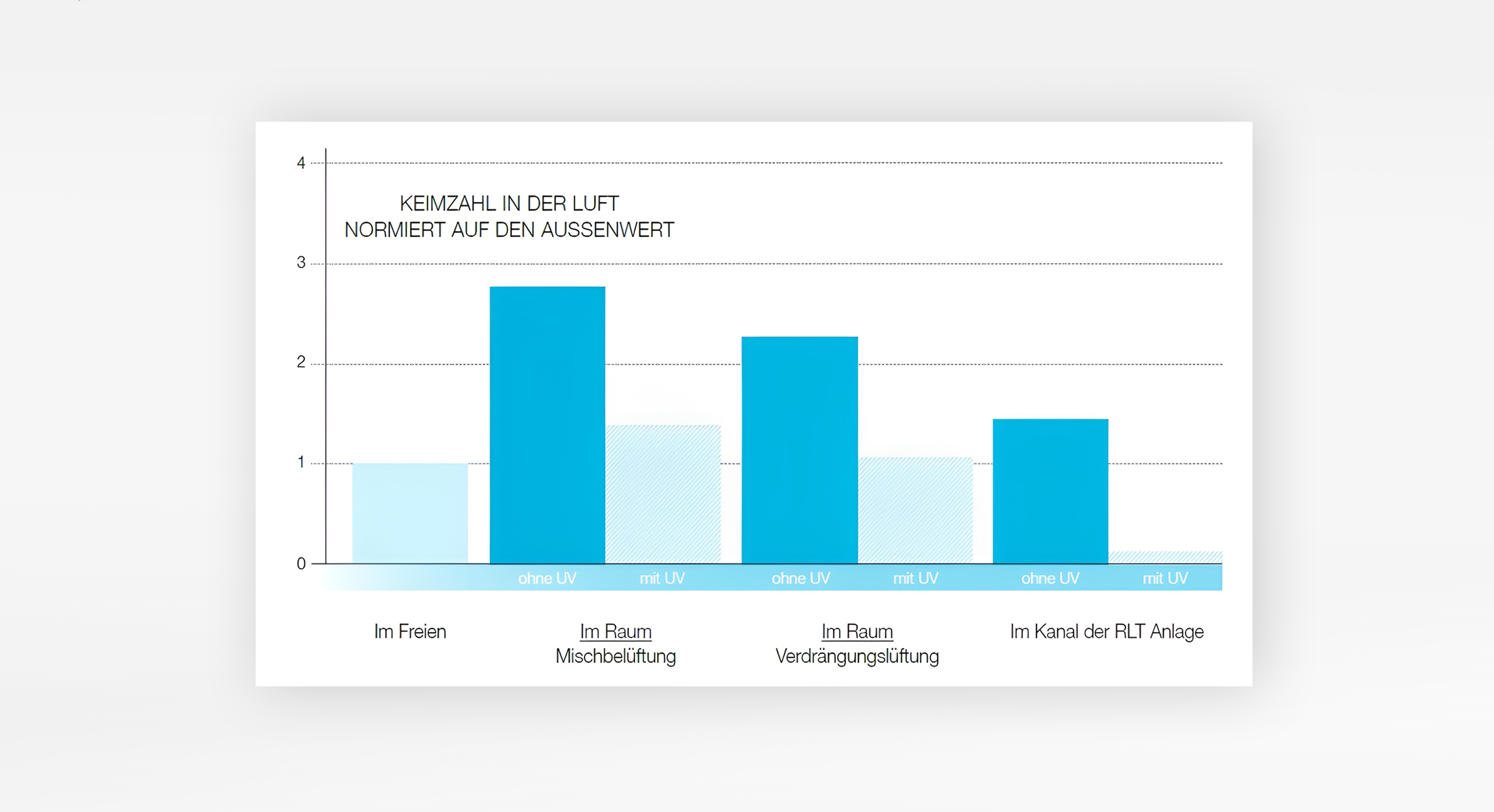
Similar to fire safety principles, Steritubes are proactively integrated into the recirculation section of the HVAC system (in the duct or air handling unit) and only switched on when required. Adjusting the airflow profile improves indoor air quality to nearly the level of uncontaminated outdoor air. At the same time, up to 30% energy can be saved by preventing short-circuit airflows. This is achieved by converting the common ceiling ventilation principle (air supplied and extracted from above) to a displacement ventilation approach (air supplied from above and extracted from below).