
ADVANTAGES – EXAMPLE
HEALTHCARE
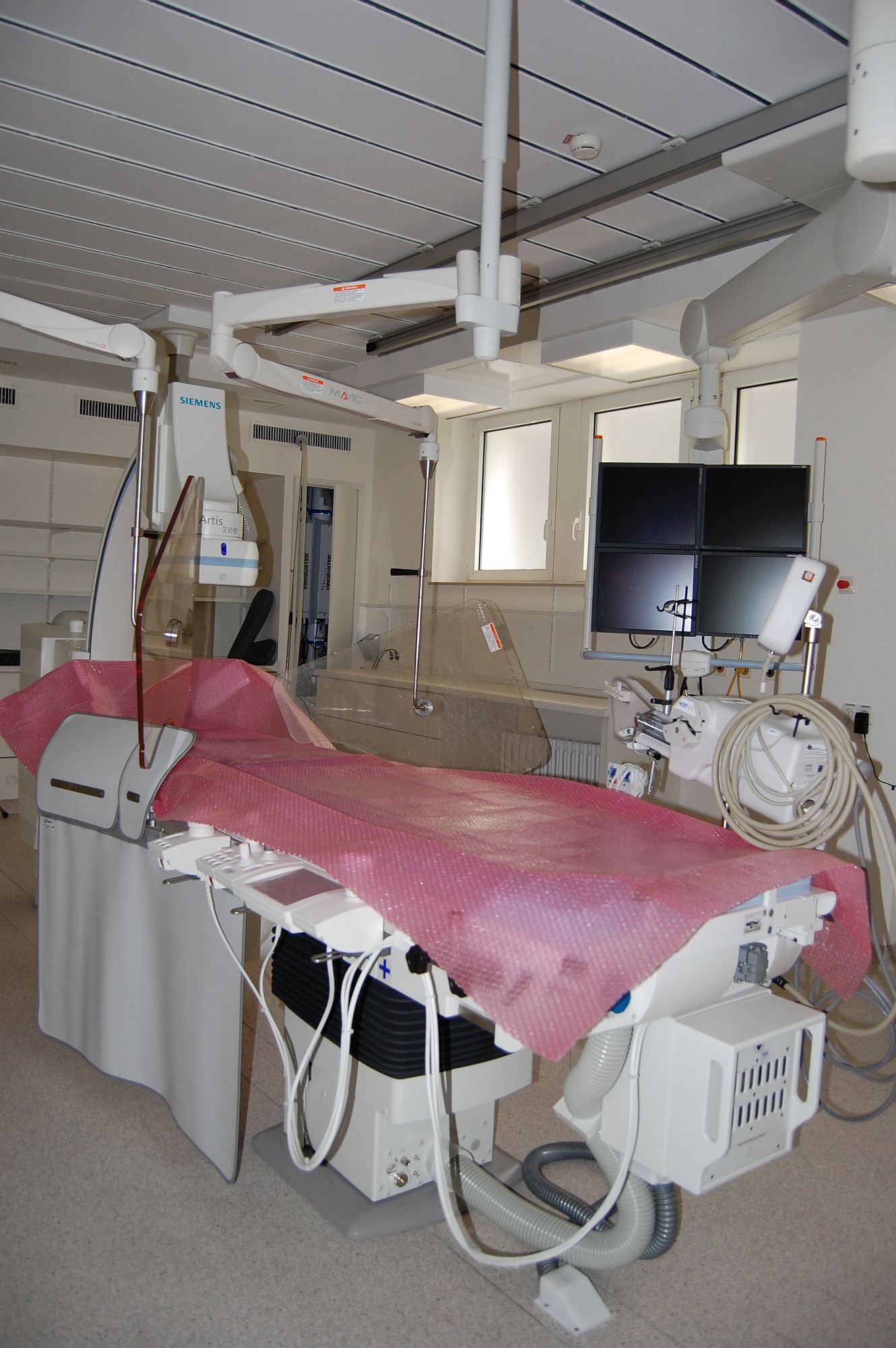
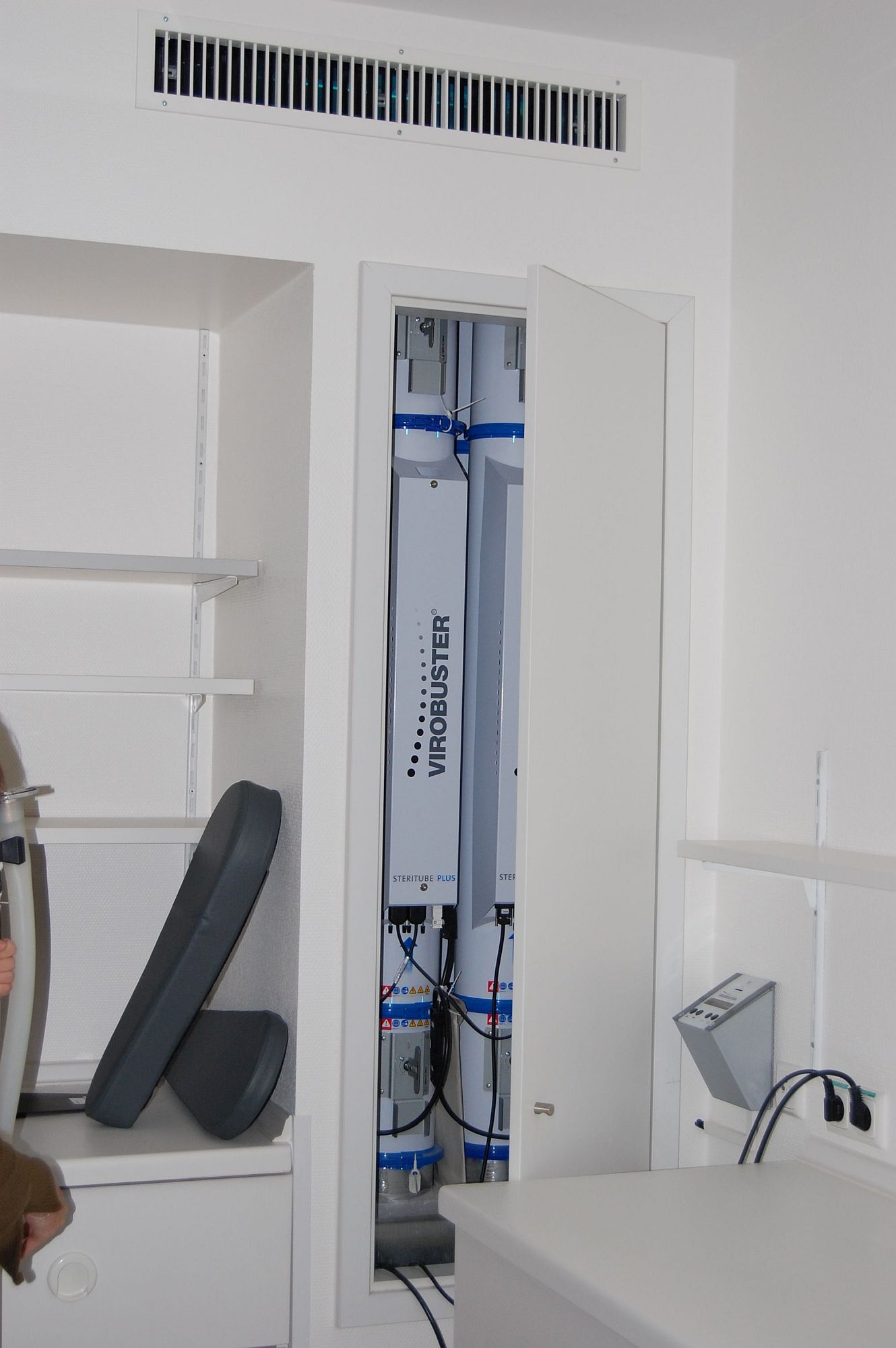
OPERATING ROOM DORTMUND / KLINIKUM DORTMUND

APPLICATION
Operating rooms, intensive care rooms, and even outpatient treatment rooms depend on a ventilation and air-conditioning system not only for infection control. The use of anesthetic gases also requires the provision of higher volumes of (cleaned) air. This is where conventional (HEPA) systems reach their limits: delivering higher amounts of purified air with a complex (HEPA) setup results in higher investment and operating costs.
DESCRIPTION
OR and ICU ventilation systems are primarily based on mechanical filtration, which comes with significant disadvantages:
- Very cumbersome filter systems
- Energy-intensive booster fans
- Hazardous and laborious filter replacement
- Continuous operation required due to filter clogging risk
- Risky and complex recirculation section
These disadvantages make such rooms extremely costly in terms of implementation, operation, and maintenance.
OUR CONCEPT
Both HEPA filters and UV-C are serious options for treating contaminated air. However, the use of UV-C provides the foundation for new approaches, offering many advantages compared to HEPA technology:
| ---> | Easy installation in both existing and new systems |
| ---> | Flexible operation – can be switched on and off as needed |
| ---> | Energy- and cost-efficient |
| ---> | UV is biologically the first choice in dealing with viruses |
| ---> | Safe to use and maintain |